
About the Cohort
Learn more about the participants who make up the cohort for CTN 222.
History of the Cohort
Dr. Marina Klein’s MSc research using retrospective data from the Montreal Chest Institute (MCI) showed that people living with HIV and HCV were experiencing increased rates of liver disease outcomes despite effective HIV treatment. Recognizing the need to improve care and health outcomes for co-infected people, she conceived the idea of establishing a co-infection cohort. After discussions with Dr. Danielle Rouleau, a research investigator at the Centre Hospitalier de l’Université de Montréal (CHUM), they developed a protocol for a pilot project.
The CCC’s body of work is extensive, multidisciplinary, and has influenced practice guidelines. The CCC investigators have collaborated on and published 66 manuscripts and count 162 accepted abstracts at provincial, national, and international conferences. Manuscripts have been published in top journals with high impact factors such as AIDS, the International Journal of Epidemiology, and Clinical Infectious Diseases. Actively involved in the professional development of research trainees, the CCC investigators have mentored 14 graduate students and 9 post-doctoral fellows.

The Canadian Co-infection Cohort Participants
This page provides descriptive statistics of CCC participant information that has been collected at baseline for all participants and compiled in an ongoing effort to provide updated information. Please note that this data is provided for informational purposes only and should not be copied or used without obtaining permission.
Enrollment
The Canadian Co-infection Cohort collects prospective data from 18 centers across 6 provinces in Canada (British Columbia, Alberta, Saskatchewan, Ontario, Quebec, and Nova Scotia. As of January 2023, the CCC has enrolled 2,105 participants, and among them, 678 are active (Figure 1).

Participant Characteristics
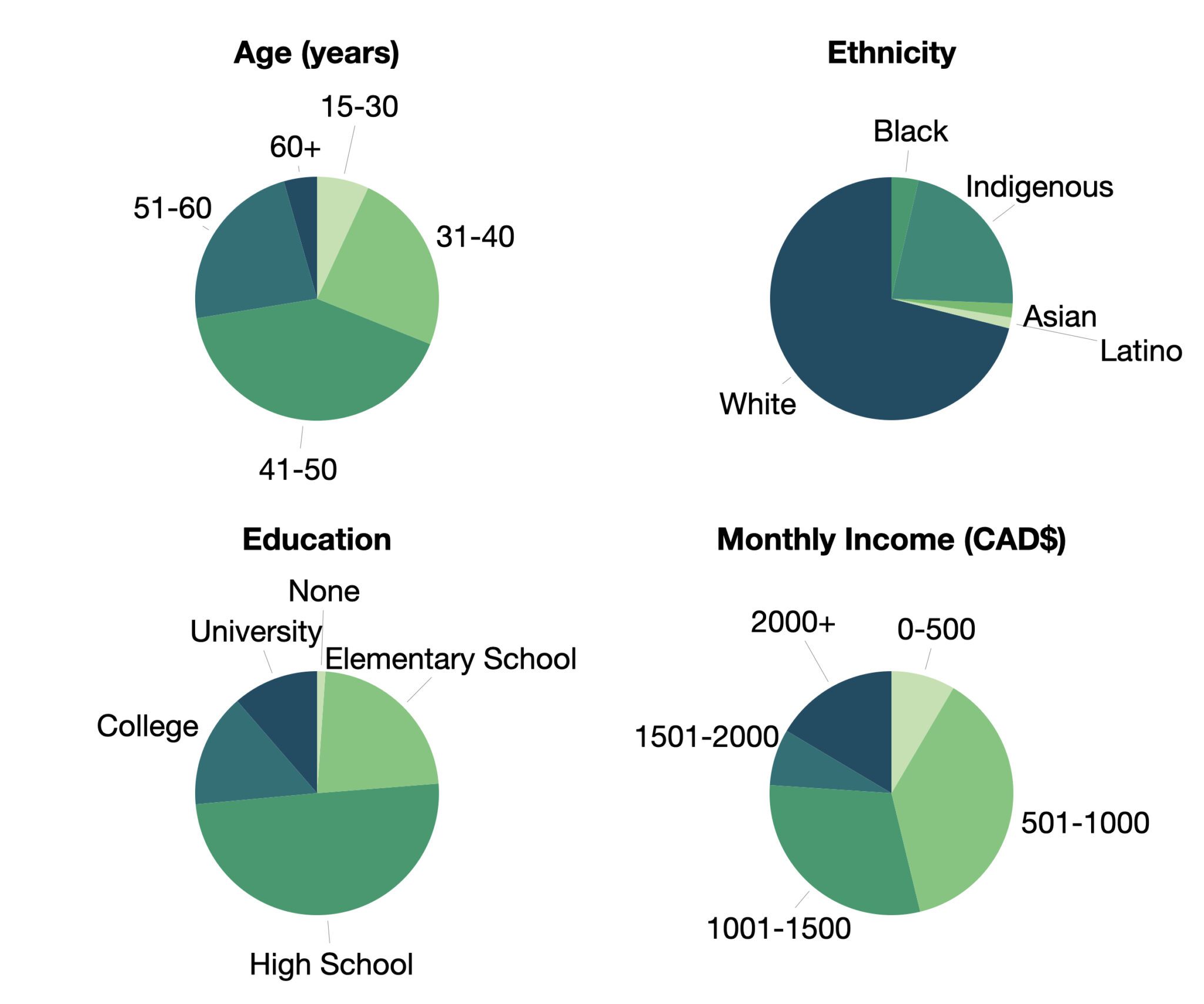
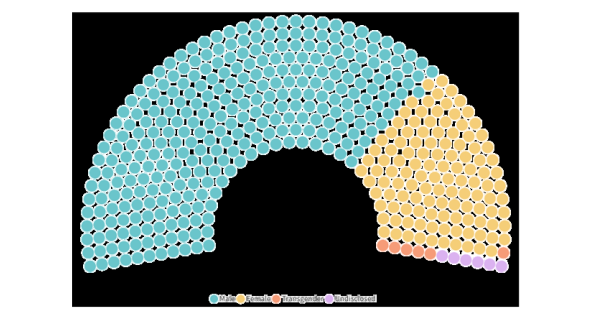
The participants of the CCC are predominately cisgender (99%), heterosexual (72%), single (68%), white (69%), females ( 28%), aged 41-50 (42%), with a high school diploma (50%) and a gross monthly income of 501-1000 (38%) (figure 2). While the majority of the participants identify as white, the CCC has a strong representation of Indigenous peoples with 1 in 5 participants (21%) identifying as Indigenous.
HIV & HCV Characteristics
To be included in the study, participants must be HIV-positive and have active HCV infection or evidence of past exposure to HCV (i.e. antibodies).
Injection drug use remains the principal mode of transmission of HCV (54%) and HIV (49%) among the cohort participants, followed by sexual transmission (HCV 16%; HIV 35%). At baseline, 82% of participants reported a history of injection drug use. As of 2023, 32% of participants report still actively using injection drugs.
HIV
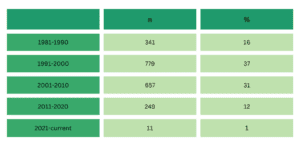
The majority of the CCC participants were first diagnosed with HIV in the ‘90s (37%), followed closely by the early ‘00s (31%) (Table 1). On average, the CCC participants have been living with HIV for approximately 21 years.
At entry into the cohort, 83% of participants were on antiretroviral therapy (ART) and 16% were HIV treatment naïve. Of those on ART, 70% had an undetectable viral load.
In 2023, 92% of the CCC participants are on antiretroviral therapy (ART) while 6% remain HIV treatment naïve. Of those on ARTs, 78% have an undetectable viral load.
HCV
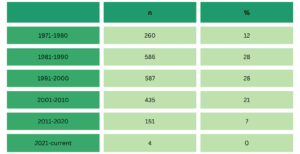
Similar to the year of the first HIV diagnosis, the majority of the CCC participants were first diagnosed with HCV in the ‘90s (28%) and the ‘00s (28%) (Table 2).
At baseline, 85% of the participants had a positive PCR test, indicating active infection.
Reflecting the distribution of HCV genotypes in Canada, the most common among the CCC participants is genotype 1 (71%) followed by genotype 3 (21%) (figure 3).
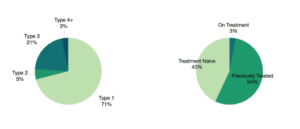
HCV treatment options have evolved over the years from the pegylated interferon era to the current direct-acting antivirals (DAAs). Combining all types of HCV treatments, at the last study follow-up, 54% of CCC participants had been previously treated, 43% are treatment naïve, and 3% were undergoing HCV treatment (Figure 4).
The CCC has closely monitored the treatment of HCV using direct-acting antivirals (DAAs) among its participants since 2018. As of 2023, 40% of the CCC participants have initiated DAA treatment, and 44% remain treatment-naive (includes approximately 15% who have spontaneously cleared their infection). Of those who have been treated with DAAs, 98% have a documented sustained virologic response (SVR), meaning that HCV was not detected in the blood 12 weeks or more after completing treatment.
Causes of Death
All deaths in the CCC are reported following the “Coding of Death in HIV” (CoDe) system, which assigns an underlying cause of death according to the International Classification of Diseases, Tenth Revision (ICD-10).
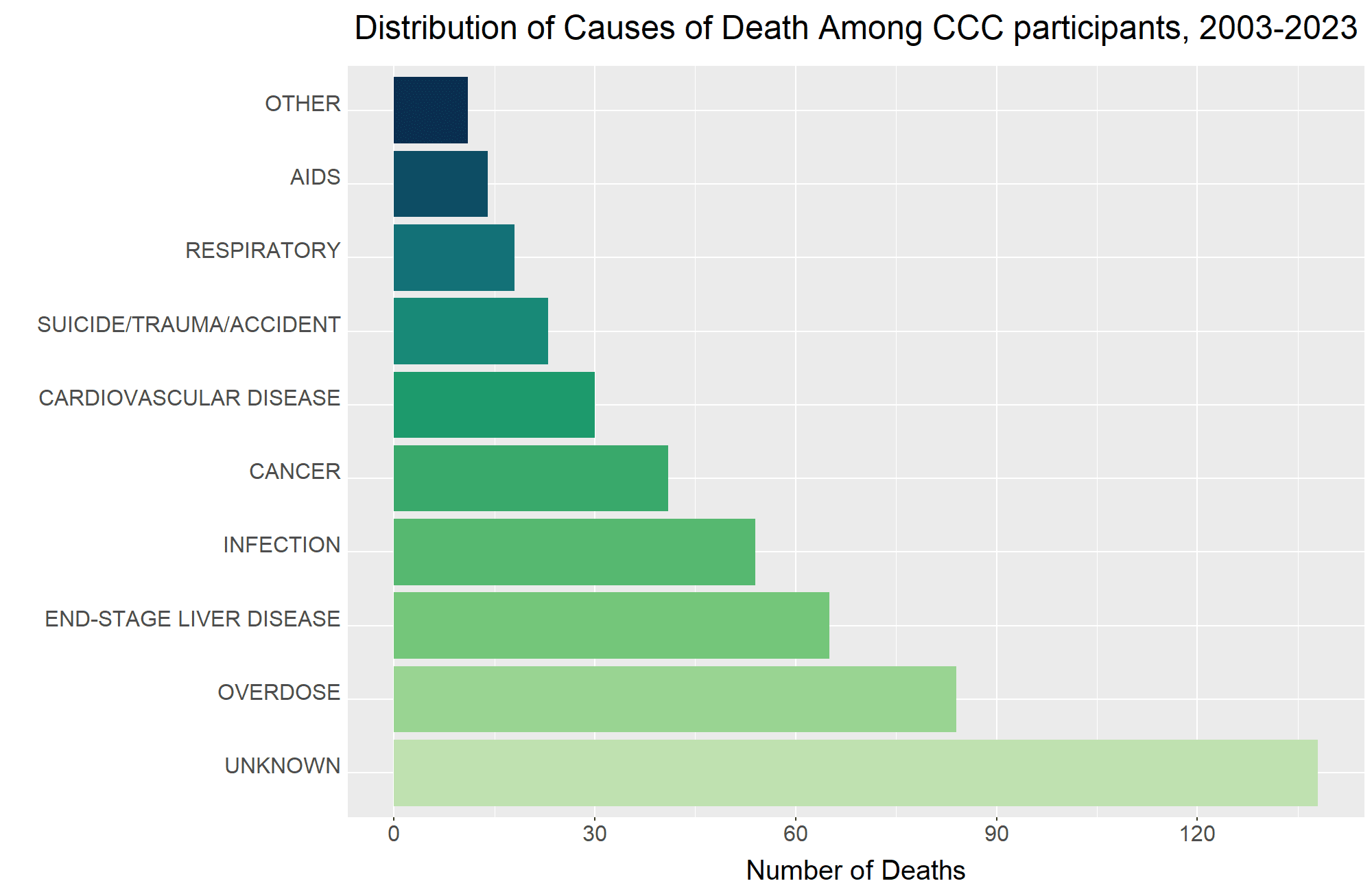
A total of 477 CCC participants have died. Recently, overdose (18%; figure 5) has overtaken liver disease and other causes of death and is now the most common, reflecting Canada’s unprecedented and growing drug-related overdose crisis, with opioid-related deaths steadily on the rise.
The second most common cause of death is end-stage liver disease (ESLD) (14%). While AIDS-related mortality has dramatically decreased in response to the widespread use of antiretroviral therapy, ESLD remains a leading cause of death among people co-infected with HIV/HCV. Despite extensive efforts to obtain information from clinics and other sources, many causes of death could not be determined.
In Memoriam
The Canadian Co-infection Cohort (CCC) is able to collect valuable data and acquire national and international recognition in large part due to the participants who continue to selflessly contribute to this study; many for over a decade.
It is important for the CCC to remember and honour the 437 participants in our study that have passed away since its implementation in 2003. Each individual was an integral part of the study.