
What happens when the world’s largest supporter of global health research threatens to withdraw its support, taking crucial access to treatment with it? The United States’ 2026 spending bill proposes to cut foreign assistance for HIV, malaria, and childhood vaccine programs, among other programs, including a 30% cut to the President’s Emergency Plan for AIDS Relief (PEPFAR). Coupled with the significant cuts to the NIH, one of the world’s largest funders of HIV research, these moves threaten to set back HIV research, programs, and access to care by decades. With the Administration opting for isolationism and curtailing its support for scientific research, it is now up to countries like Canada and organizations like the CTN+ to step forward and lead. Because, despite major research-led advances in the prevention of infection and care of people living with HIV/STBBIs, these epidemics are by no means under control. While Canada had previously been on track to meet WHO targets, a 35% increase in new HIV diagnoses (n=2,434) was reported in 2023 compared to 2022 — the largest number of new cases in 10 years.
As a cornerstone of the Federal Initiative to Address HIV/AIDS in Canada, the CTN+ has been a leader in pioneering HIV research for the past thirty years, particularly through centering community involvement. We spoke with Juan Michael Porter II, an American HIV advocate, health journalist, and member of the CTN+ Community-Centered Knowledge Hub External Advisory Committee, to discuss the ripple effects of the US budget cuts, Canada’s role in advancing HIV research, and how organizations like the CTN+ can help protect access to treatment and knowledge.
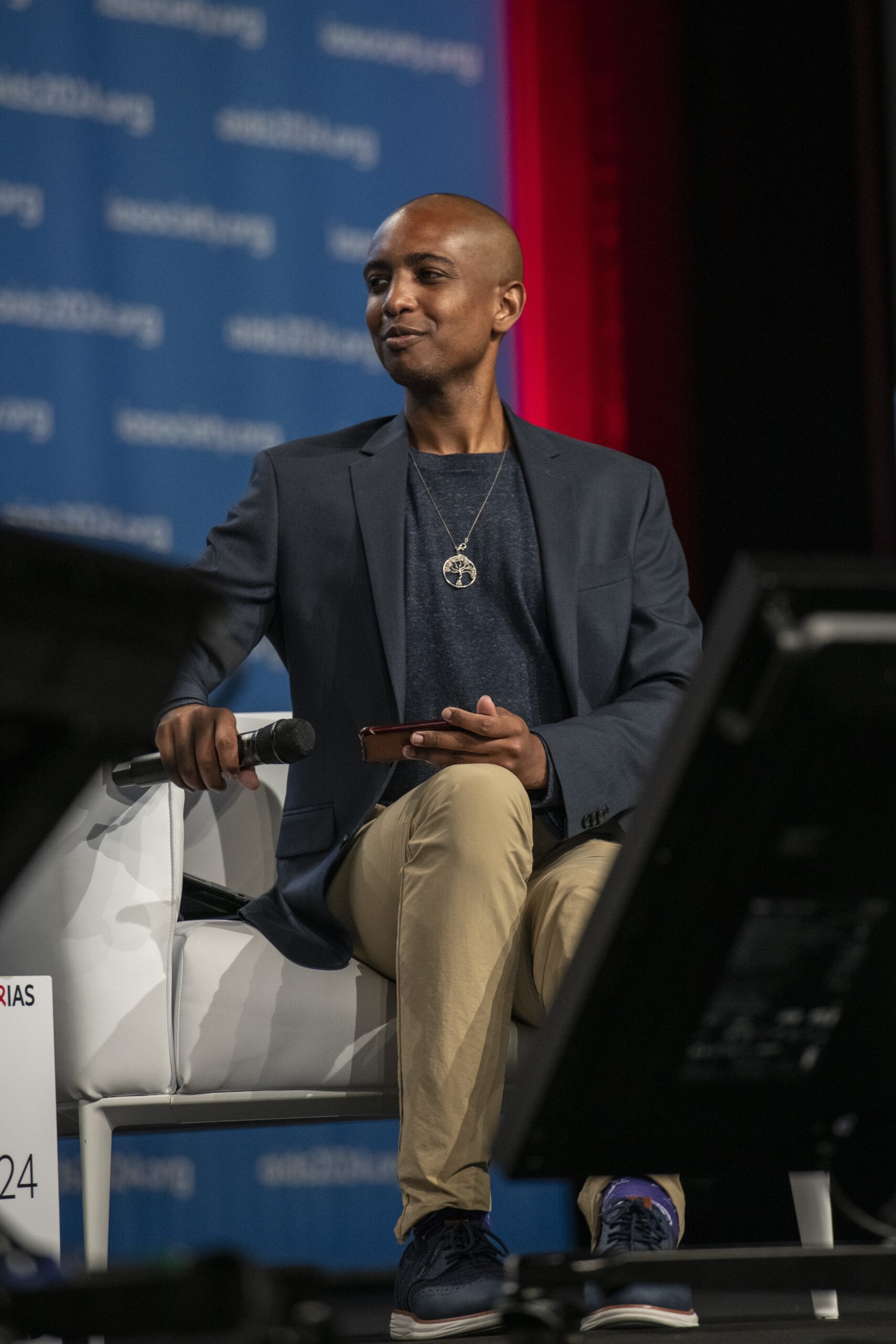
Juan Michael traces his connection to HIV activism back to his high school days as an STI escort, accompanying peers who are too afraid to go alone to get tested. His own HIV diagnosis in 2015 would put things into perspective.
“It took a while to decide whether or not I wanted to live, and if I’d be fine,” Juan Michael said. “But while trying to reconcile with my diagnosis, I realized that there were a lot of different stories being told about HIV that were not community-centered and that didn’t get to the very basics of what it means to live with HIV.”
On a quest to fill the gaps in the stories being told, Juan Michael began writing for TheBody, first as a freelancer and later as a senior editor, becoming the first person living with HIV to hold the position. In his efforts to destigmatize HIV, he often drew heavily on his personal experiences. “It’s socially acceptable to discriminate against people living with HIV. But I’m not one to accept that, nor am I one to apologize for my existence,” he said.
Juan Michael now hosts the International AIDS Society’s HIV Unmuted Podcast, where he interviews global HIV leaders and asks what we must do to end the epidemic. He is also the communication officer of the US People Living With HIV Caucus, where he coordinates with HIV networks across the US to share their messages with community members, allies, and policymakers.
Knowledge as an effective tool
In the hands of the community, knowledge can be used to inform, protect, and self-advocate. It is an essential ingredient in ensuring that people living with HIV, as well as those at high risk of transmission, can make informed and proactive decisions regarding their health care. Overnight, systems that provide that knowledge have started to vanish.
For Juan Michael and many others whose lives and careers are deeply connected with HIV activism and research, the announcement of funding cuts caused distress. There is also exhaustion from decades of fighting for change. “Why are we suddenly taking all these steps back? Why are we undoing the work that has been proven to work?” he said.
Impact on milestones
Recent policy changes in the US and the resulting budget cuts will have a ripple effect on international goals, including UNAIDS 90-90-90 targets to end HIV. These global targets aim for 90% of people living with HIV to be diagnosed, 90% of those diagnosed to receive treatment, and 90% of those on treatment to achieve viral suppression.
With US funding cuts threatening access to treatment supports, countries like Canada are stepping in to fill these gaps by maintaining a steady commitment to investing in the Global Fund to Fight AIDS, Tuberculosis and Malaria. As of the end of 2024, Canada was the Fund’s 6th largest government donor. “Canada has made continued, consistent investments towards containing HIV, both domestically and globally,” Juan Michael said. The prevailing sentiment is that Canada’s stable governance and policies mean its aid can be relied on not to disappear overnight.
However, Canada’s own 90-90-90 goals remain unmet as of 2020, with only 87% of people living with HIV on treatment nationally, and provinces like Manitoba, Saskatchewan, Quebec, and Ontario lagging on some or all of the targets. HIV diagnosis rates in Canada reached a ten-year peak of 6.1 per 100,000 people in 2023, making it the only G7 country with rising HIV rates.
With ongoing research and new regional approaches, collaborative priority setting, research development, and knowledge mobilization can empower local knowledge users to improve access to treatment and prevention at the community and grassroots levels, contributing to the achievement of provincial and national HIV targets.
Fighting misinformation and leading with compassion
With the increasing spread of health misinformation across social media platforms, Juan Michael also stresses that it’s more crucial than ever for organizations like the CTN+ to share accessible, factual information with a wide audience. This means addressing real issues when engaging with communities, communicating how they might be affected and what they need to understand in a way that is approachable and useful.
Fortunately, Canada is well-positioned to be at the forefront of sharing vital public health information in this rapidly shifting landscape. “At the CTN+ specifically, we carry out our work with the understanding that we need to make information accessible and available without borders or barriers,” he said. This includes working with community partners to plan, develop, and share research findings in a clear, understandable way that prioritizes community relevance.
“It’s also important to get the language right to break the stigma. A lot of historical terms used in health care and research originate from a puritanical and judgmental perspective; eliminating stigmatizing language can change how people receive the knowledge shared with them,” he said.
Using non-stigmatizing language when discussing HIV can influence how people perceive, access, and utilize information, ultimately improving engagement within communities over time.
However, access to information alone cannot help us achieve collective progress. Juan Michael emphasizes focusing on the social determinants of health when addressing the issue of accessibility.
“At the very basic level, we need to understand how people engage with care and whether that care is actually reaching them,” Juan Michael said. “In places where people cannot even access food, and that isn’t being addressed, it doesn’t matter that HIV medications are available because they are unlikely to reach those in need.”
New treatments on the horizon
Juan Michael, who regularly attends and participates in HIV conferences, finds a silver lining in the emerging treatments from ongoing research in Canada and beyond.
He cites the example of lenacapavir, an injectable, long-acting antiretroviral medication that was approved for use in Canada in 2022. Lenacapavir has now been approved in the US for pre-exposure prophylaxis (PrEP) for HIV prevention, with a review currently underway in Canada.
He also feels encouraged by discussions at international conferences around shifting away from relying solely on the US to lead and fund HIV research and programs. “There is now a push for more inclusive, global participation driven by those most affected, and this could be key to creating a truly worldwide response to HIV,” he said.
With guidance and support from key voices like Juan Michael, there’s a sustained push at the CTN+ to support inclusive, community-driven, regionally relevant initiatives and research projects that can move the needle on preventing, treating, and curing HIV. The lived experiences and expertise of diverse community members, researchers, and care providers enable networks like the CTN+ to play an important role in Canada’s efforts to end HIV, leading where others have stepped aside. If you are interested in joining the Network, visit our website.