Québec Regional Team

Regional Overview
Québec has a rich and impactful history of HIV activism, research and care. In recent years, the number of people with HIV has risen in Québec, mostly among migrants. Recruitment and mentoring of new talents to co-design, conduct and promote HIV and STBBI research, with a focus on enhanced regional, gender, and ethnocultural diversity, is of paramount importance for our region. Québec provides an ideal environment to develop innovative study designs that bridge discovery to bedside and communities, adapted to diverse populations and settings.
Priorities
- Strengthening the research continuum across community-based, clinical and basic research, with meaningful engagement of people with lived experience.
- Sustaining and enriching our network, promoting cross-discipline collaborations and enhanced coverage of regional, gender and ethnocultural diversity.
- Develop adaptive platforms trials to test innovative interventions in the fields of prevention, cure, healthy aging and implementation science, co-designed with people with lived experience.
- Evaluating and co-designing community-based prevention, linkage to care and treatment strategies across diverse populations and settings (remote communities, prisons, marginalized and racialized communities).
- Recruiting, training and mentoring the next generation of diverse actors in the fight against HIV and STBBI, and promoting and supporting Science in French / La Science en français
Additional Priorities
The Québec Regional Team maintains a number of key collaborations aimed at leveraging world-class expertise to conduct translational research of innovative treatments, including for HIV cure, mitigation of viral-associated inflammation and comorbidities. Additionally, the Team is working to incorporate AI and mHealth patient-centered initiatives to co-design and promote patient-reported outcomes tailored to the needs of individuals affected by HIV and STBBIs, ensuring more personalized and impactful care.
Québec Training Awards Competition
Part of the CTN+ Phase 2 funding, the Québec Training Awards support training in innovative adaptive clinical trials methodologies.
This training award competition aims to support the development of new skills and knowledge in the fields of HIV and STBBIs, in order to increase participants’ capacity to actively engage in research, particularly in the design, implementation, and conduct of innovative adaptive clinical trials.
It is open to learners from diverse backgrounds — students, research staff (e.g., technicians, coordinators, research nurses), researchers, clinicians, pharmacists, and community workers, as well as people with lived or living experience of HIV or STBBIs.
Five (5) awards of $10,000 are offered each year, one per training area, renewable for up to two (2) years (total of $20,000).
The Quebec training platform promotes the development of personalized pathways, interdisciplinary collaboration, and the meaningful integration of people with lived experience in research. Applicants must select one primary research area based on their background and interests and include activities from at least one additional area.
- People with Lived Experience of HIV or STBBIs – Meaningful participation in research, with or without prior experience.
- Basic Sciences – Fundamental and translational research in HIV and STBBIs.
- Clinical Sciences – Clinical research and clinical trials in HIV and STBBIs.
- Methods and Biostatistics – Study design, methodological analysis, and evaluation.
- Community-Based and Person-Centred Research – Participatory research, health equity, and knowledge mobilization.
To be eligible, applicants must:
- Be engaged or intend to engage in HIV or STBBI research;
- Have their primary activities based in Canada for the duration of the award;
- Obtain support from a supervisor or mentor to assist them in the process. The supervisor or mentor must be affiliated with CTN+ and eligible to hold and administer funds from the Canadian Institutes of Health Research (CIHR).
There are no citizenship restrictions.
Applications may be submitted in French or English to QuebecTraining@thectn.ca. See submission directions in the application form for specific requirements.
Application FormThe application package must include the following components:
personal statement
Describe your research background and relevant professional, scientific, and/or lived experiences. You may include any information relevant to your trajectory, including scholarships and awards, publications, academic or professional achievements, and short- and long-term career goals.
Maximum 1 page.
objectives & motivations
Describe your interest in HIV and STBBI research in relation to your background and experiences. Explain how this award will contribute to your development and specify the skills you wish to acquire or strengthen during Year 1. Also indicate how mentorship and cross-axis activities within the platform will support your professional progression.
Maximum 0.5 page.
training proposal
Applicants must submit a one-year training proposal describing planned activities and their contribution to research skill development, including participation in cross-area activities and anticipated outcomes. Applicants must identify a platform mentor and justify their choice in relation to their training objectives.
The Year 1 budget must total $10,000, of which up to $6,000 may be used as a salary award. Selected candidates will be invited to co-develop, with their mentor, a structured Year 2 training plan to further optimize professional development.
Maximum 0.5 page.
For the three sections combined, a maximum of 2 pages is permitted (2 cm margins, Times New Roman 12-point font, single spacing; references may exceed this limit). Sections must be combined into a single PDF file and uploaded.
CV
Applicants must submit an up-to-date curriculum vitae. The Canadian Common CV (CIHR biosketch format) is recommended, but other formats appropriate to your situation or field of expertise are also accepted.
letter of support
Provide a signed letter of support from the primary supervisor, including the proposed supervision plan.
Maximum 1 page.
Each application will be evaluated by at least three reviewers, including one person with lived experience of HIV or STBBIs.
Evaluation criteria (scored 0–5):
- Relevance of background and alignment with the selected area;
- Productivity or prior engagement (not applicable to Area 5);
- Clarity of objectives and motivation;
- Quality and feasibility of the training curriculum;
- Quality of the supervision and mentorship plan.
If an award is not granted within a specific axis, it may be reassigned to an outstanding application in another area.
One $10,000 award is granted per training area per year.
Up to 60% of the award may be used as a salary stipend.
Remaining funds may cover training, travel, internships, or conference expenses.
Equipment purchases are not eligible.
The award is renewable for a second year, conditional upon submission of a satisfactory progress report and a new training plan developed in collaboration with the mentor. An additional $10,000 will then be awarded.
Competition launch: March 24, 2026
Application deadline: May 24, 2026
Results announcement: July 2026
Start of awards: Fall 2026
The Platform applies practices that promote equity, diversity, and inclusion, including broad dissemination of the funding call, representative committees, bias-aware evaluation processes, respect for Canada’s official languages, and flexible training pathways. Parental or medical leave may result in an equivalent extension of the award.
Quebec Team Leads
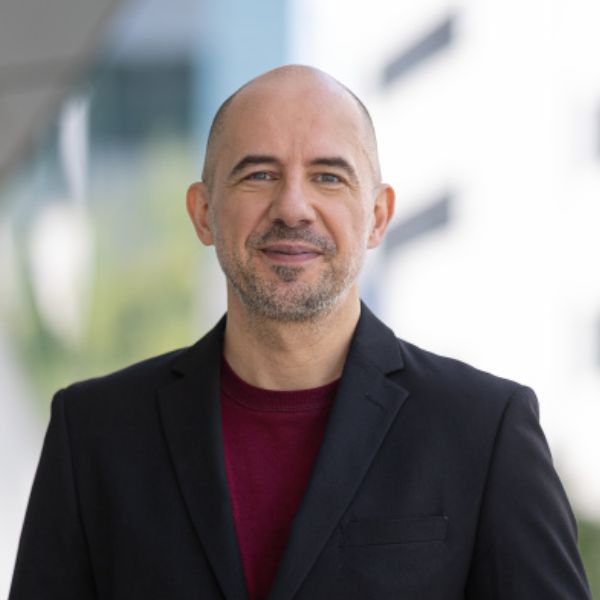
The leadership for the Quebec team includes an Indigenous Co-lead, two academic Co-leads, one Community Representative, and an Early Career Researcher.





Contact Details
If you are interested in getting in touch with the Quebec Regional team, contact us below.



Quebec Team News
-

Building Capacity for Community-Engaged Research: CTN+ Phase 2 Funding
As the Network moves into its second year of operations, with our Regional Teams and scientific Think Tanks…
-

Guy-Henri Godin honoured with award for tireless advocacy work
An esteemed member of the CAC, he was recently recognized by the Canadian Hemophilia Society for forty years…
More News
Related Studies
-
CTNPT 055: Testing Immunogenicity and Durability of Mpox Vaccination in People Living with HIV
Vaccines in a Time of Dual Pandemic: COVID-19 Vaccine in People with HIV
-
CTNPT 048: The MOVE-UP Study
Mapping Opportunities for HPV Vaccination and Screening Engagement and Uptake in Trans Men and Gender Non-Binary Individuals Assigned Female at Birth
-
CTNPT 052: Glycoprotein 120 as a pan-toxin
Exploring the role of the soluble glycoprotein 120 as a pan-toxin driving immune dysfunction and accelerated aging in people living with HIV
-
CTN 338: PLATINUM-CAN
Placebo-controlled randomized trial of tecovirimat in non-hospitalized patients with Mpox: Canadian Feasibility Study
Related Publications
Here are some of the latest publications from the Quebec team.
Related Resources
-
Types
CTN+
Find out more about what we learned and what we shared at the 20th Conference of the European AIDS Clinical Society (October 15–18, 2025)
Our People
CTN+ Researchers are the backbone of the Network through generating ideas, collaborating on new initiatives, conducting research, and sharing their knowledge.
Explore Our NetworkJoin the CTN+
Interested in joining the CTN+? We’re always on the lookout for new members to answer the most pressing research questions of today, while anticipating the questions of tomorrow.
Learn More