
Untangling the Many Facets of HIV Stigma
Dr. Paolo Palma joined the CTN+ in 2025 as a postdoctoral fellow. Grounded by a background in social psychology, he’s driven to understand the health impact of prejudice and discrimination, and how we can effectively reduce those prejudices to change behaviour. Read on to learn more about Dr. Palma’s work and his current project, ‘HIV Stigma and the health and wellbeing of gay, bisexual, and other men who have sex with men (GBM) living with HIV’.
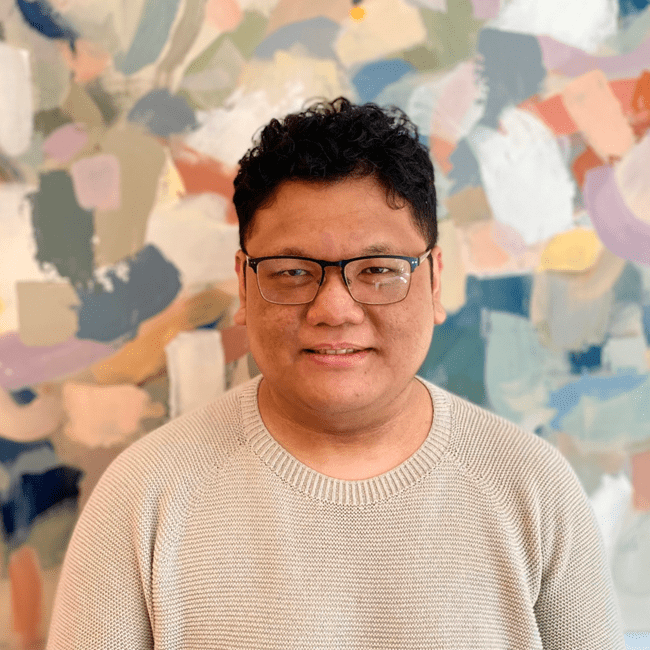
“A lot of the HIV stigma research focuses on sexual behaviours, on beliefs and fears about HIV transmission and partnering with HIV-negative individuals,” said Dr. Paolo Palma. “But HIV stigma isn’t just about those fears surrounding transmission.” Far from impacting any one dimension, Dr. Palma explains that stigma is complicated and multi-faceted, impacting individuals’ physical health, mental health, and their relationships with others.
Dr. Palma’s research project is specifically looking at the impact of the U=U campaign on HIV stigma. Standing for Undetectable=Untransmissible, the phrase means HIV that is well-managed by antiretrovirals to the point where its viral load is undetectable, there is no longer risk of spreading the infection — whether through sex, sharing needles, or breastfeeding.
The widespread adoption of HIV medications has made it significantly easier for people living with HIV to go about their daily lives without fear or anxiety. However, that doesn’t mean the stigma surrounding HIV evaporated overnight. Dr. Palma said, “I wanted to look at how changes in people’s beliefs about U=U affects the stigma that people living with HIV experience.”
That’s why he’s working alongside his supervisor and CTN+ Prevention & Testing Think Tank Lead Dr. Trevor Hart at the HIV Prevention Lab at the Toronto Metropolitan University. Their team recently launched the Men’s Experiences with Substance and Sexual Health Survey (MASH), which will collect longitudinal data on experiences with sexual health and substance use in Toronto, Winnipeg, and Montreal. A portion of the survey is dedicated to investigating the stigma experienced by people living with HIV. This information can then be used to improve and refine future public health campaigns.
Expertise from across disciplines
One of the biggest challenges Dr. Palma experienced in his research was adjusting to thinking of things in a public health context and working with secondary data when his background is in social psychology. “There’s been a learning curve in terms of the language, the methodology, and also the type of sources I’m using for data analysis,” said Dr. Palma. “It’s not always the way I’d necessarily have thought to measure things, but it’s providing me an opportunity to answer these questions that I wouldn’t be able to answer otherwise.”
At the same time, Dr. Palma’s background in social psychology is one of his greatest strengths, as it gave him the inspiration to tackle the topic from anew angle. “In social psychology, a lot of the work o prejudice and stigma focuses on things like racism and anti-immigrant prejudice and less on things like HIV status,” he explained.
“When I started my work at the HIV Prevention Lab, a lot of my early projects were on topics like PrEP and beliefs about HIV transmission. That’s where I saw a lot of the commonalities in how public health scientists approached research about HIV stigma and how social psychologists study racism and prejudice reduction,” he explained. In social psychology, one of the most effective interventions for racism is something called ‘intergroup contact.’ “That’s where you have, for example, a white person interacting with a person of colour. We see that this contact can reduce the prejudice of a white person.
“But the focus is on the white person’s experience without thinking about how a person of colour would be affected in this type of intervention,” Dr. Palma said. “And that was the same thing that I was seeing with how you see HIV stigma research being framed around the attitudes of HIV negative individuals. And it makes sense, to an extent, why it’s framed that way. But for me, I got curious about the experiences of people living with HIV.”
This perspective returns to the core focus of Dr. Palma’s work: community. He said, “Whenever I listen to the community members asking their questions, they have all these insightful things that they bring up about research. And it’s not all just about sexual health, but their broader life experiences as well.”
Dr. Palma hopes that it is these life experiences he’ll be able to capture in his research. “We’re missing out on all of this nuance if we don’t pay attention.”