In a tumultuous global landscape, Canadian HIV and STBBI research continues to drive innovation.
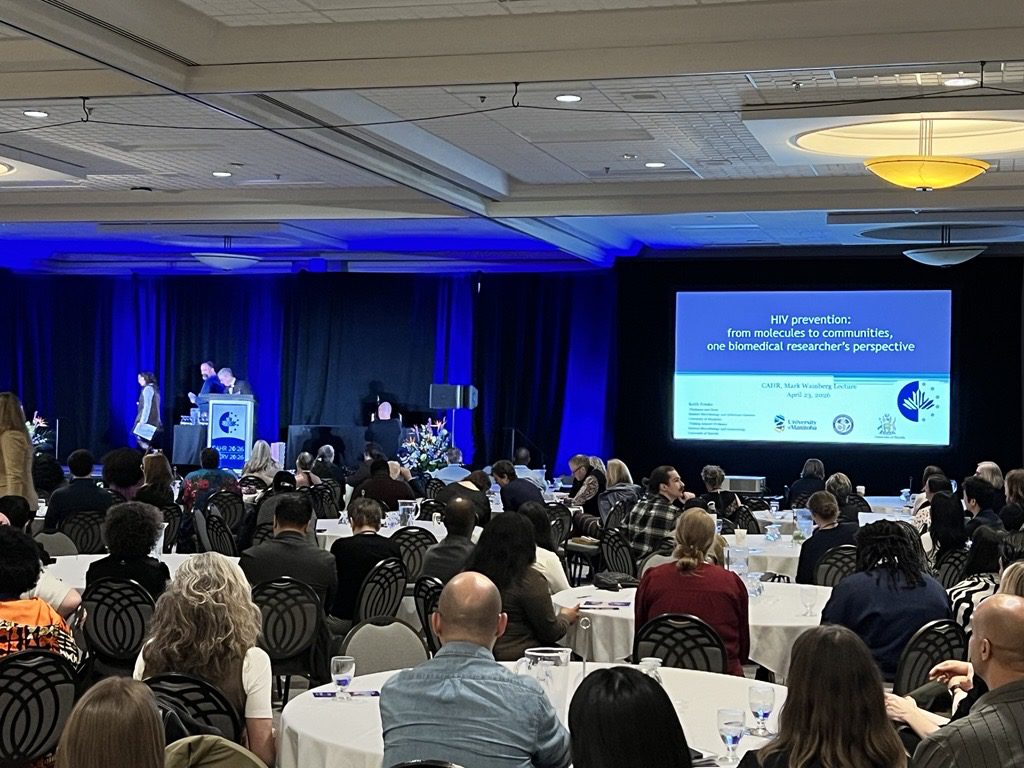
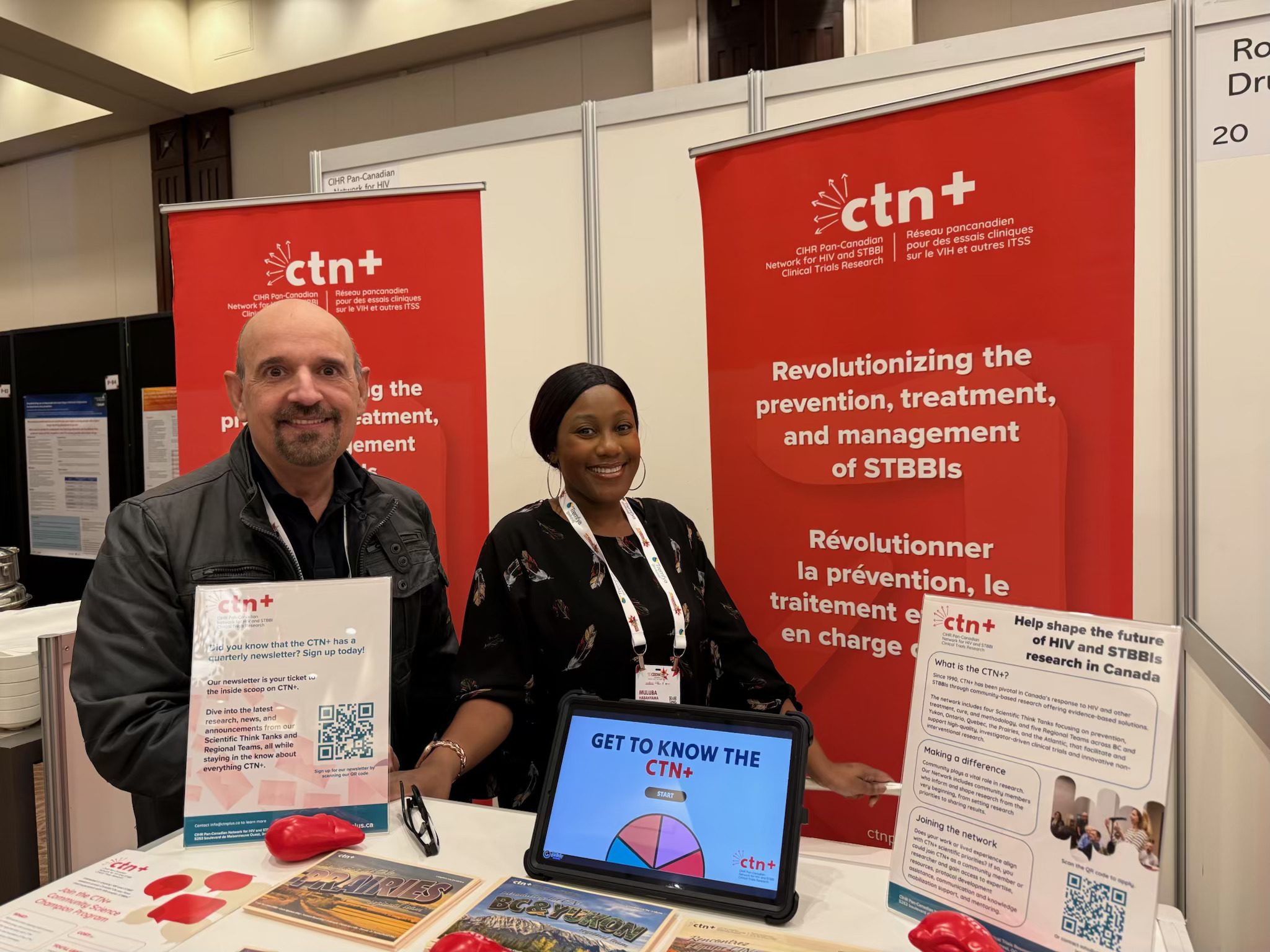
Every year, scientists from across the country gather for Canadian Conference on HIV/AIDS Research (CAHR). This year it was held in Winnipeg from April 23–26, under the theme of “Under open skies: Rising to meet unprecedented challenges in the HIV response.” The dozens of CTN+ researchers and staff at the meeting embodied this year’s theme as they shared updates from their ongoing work, learned from and collaborated with others, and set goals that will shape future research and public health policy.
Even if you were able to attend CAHR this year, in the flurry of talks, posters, and other presentations, it’s easy to have missed a few things. Let’s take the time to reflect on some of what CTN+ members shared.
Cutting-Edge Results
One of the key goals driving HIV internationally is the promise of a functional cure, and this year we took one step closer to making that a reality. A team led by CTN+ researchers reported a case of prolonged HIV remission following cancer treatment and a bone marrow transplant. The team, led by CTN+ National Co-director Dr. Sharon Walmsley and CTN+ Researcher Dr. Mario Ostrowski, reported their results in a late breaking abstract session at CAHR. The patient, dubbed “The Toronto Man,” stopped antiretroviral therapy (ART) in July 2025 and, as of April 2026, remains undetectable. He represents the 11th instance of someone whose HIV remains undetectable after undergoing such a treatment. His case offers further opportunity to study the mechanisms that could underpin potential large-scale cures.
Each year the Mark Wainberg Lecture honours the memory of the memory of the instrumental figure in HIV and AIDS activism for which it was named by highlighting a voice that is carrying that legacy forward. This year, that honour was given to CTN+ researcher Dr. Keith Fowke, who presented on the process of testing the safety, effectiveness, and affordability of the anti-inflammatory drug acetylsalicylic acid (also known as aspirin) in inducing the features of immune quiescence in patients. The talk particularly focused on the integral role community partners are playing in this research, emphasizing the contributions of female sex workers in Nairobi, Kenya.
The Basic Science Plenary Session this year was presented by CTN+ researcher Dr. Jessica Prodger, who gave a talk entitled “HIV Persistence During ART: Lessons from Longitudinal Studies in Rakai, Uganda”. Dr. Prodger discussed how she and her team made key discoveries such as how differences in viral reservoir outgrowth associated with sex and menopause, how HIV evades the immune system, and how treatment changes may temporarily affect HIV latency.
Powerful Postdoc Presentations
A key element of research is setting a firm foundation for future science. To that end, the CTN+ is committed to fostering early-career researchers through our Postdoctoral Fellows program. Each year, CTN+ postdocs provide important contributions to the CAHR conference.
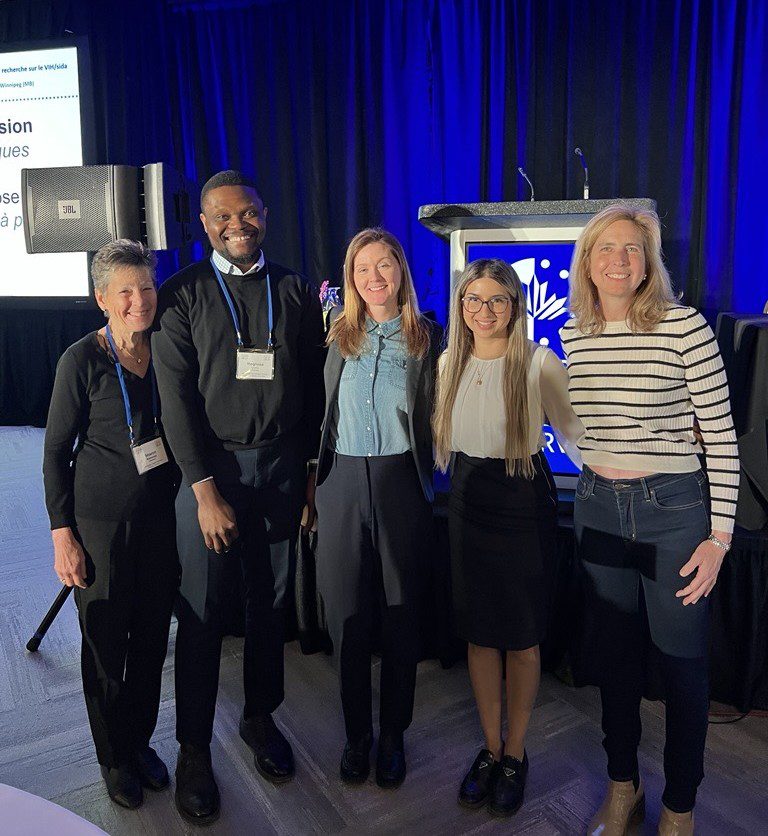
The annual CTN+ Breakfast Symposium serves as a chance for guests to fill both their stomachs and their minds. This year, Dr. Ihoghosa Iyamu presented on ways for digital STBBI tools to effectively and sustainably grow from pilot to scale, using data collected from the GetCheckedOnline program. Dr. Sheliza Halani presented on how HIV PrEP counseling can be used to support prescription among women. Dr. Kathleen Inglis, in collaboration with Ribbon Community’s Wayne Campell, discussed a novel community-led administrative data research project called the “HIV and Eng/aging Project,” and the tensions which arose due to shifting from traditional community-based research to unique administrative data research collaborations.
At the Social Science Abstract Session, CTN+ postdoctoral fellow Dr. Olivia Price, supervised by Dr. Nadine Kronfli, presented research focused on semi-structured interviews with incarcerated people in two Quebec prisons. This research found that dried blood spot testing was considered an acceptable method to test for HIV and other STBBIs.
Impactful Updates
With over 20 CTN+ studies currently ongoing, there were numerous updates from CTN+-led research. Here are some key results from just four of those studies.
The British Columbia CARMA–CHIWOS Collaboration (BCC3; CTN 335) is a study investigating role of female sex hormones and chronic/latent co-infections on cellular aging and comorbidities in women living with HIV. BC–Yukon Regional Team co-lead Dr. Melanie Murray presented on “Healthy Aging Talks,” an innovative approach to knowledge mobilization that emphasizes not just information delivery, but rather a shared proceed that values dialogue, lived experiences, and relationship building. BCC3 poster abstracts presented at CAHR also explored barriers to survey and study completion among women living HIV, and how mitochondrial DNA does not seem to differ between women living with and without HIV in BC.
The Canadian Co-Infection Cohort (CTN 222) found that co-infection of HIV and hepatitis C virus was associated with changes to a lipid-based signaling system called the endocannabinoidome which seems to be associated with liver fibrosis.
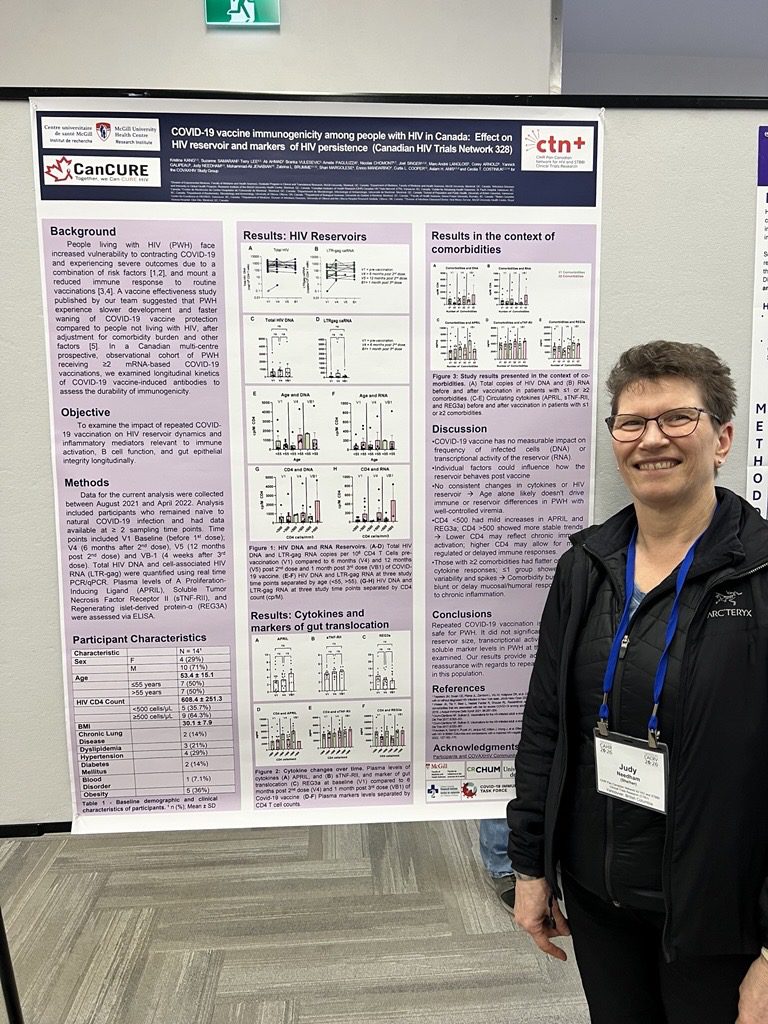
The Engage Cohort Study (CTN 300) is focused on the prevention of HIV among gay, bisexual, and other men who have sex with men (MSM). One poster presented at the conference covered topics such as how the outcomes of sexually transmitted infections were driven by differences in crystal methamphetamine use risk, condom-less anal sex, and condom attitudes between people, rather than within-person changes. Another poster reported on how older age, higher numbers of sexual partners, condom-less sexual activity, and HIV-PrEP use were associated with HHV-8 seropositivity.
The Carma Endo Study (CTN 277) is aimed at assessing the prevalence of various endocrine, metabolic, and reproductive abnormalities in HIV-positive and HIV-negative women and female youth. One poster presented a preliminary data suggesting a partial improvement in inflammation patterns upon hepatitis C virus clearance.
Events like CAHR serve as a backbone for the Canadian HIV and STBBI research community, providing an avenue not only for knowledge mobilization, but as a way to foster community and connection between the many people who make these projects possible. If you’re still eager to learn more about the research presented at this year’s conference, you can read the full Abstract Book. Otherwise, we hope to see you next spring in Montreal for CAHR 2027.